
Reach Out and Touch It
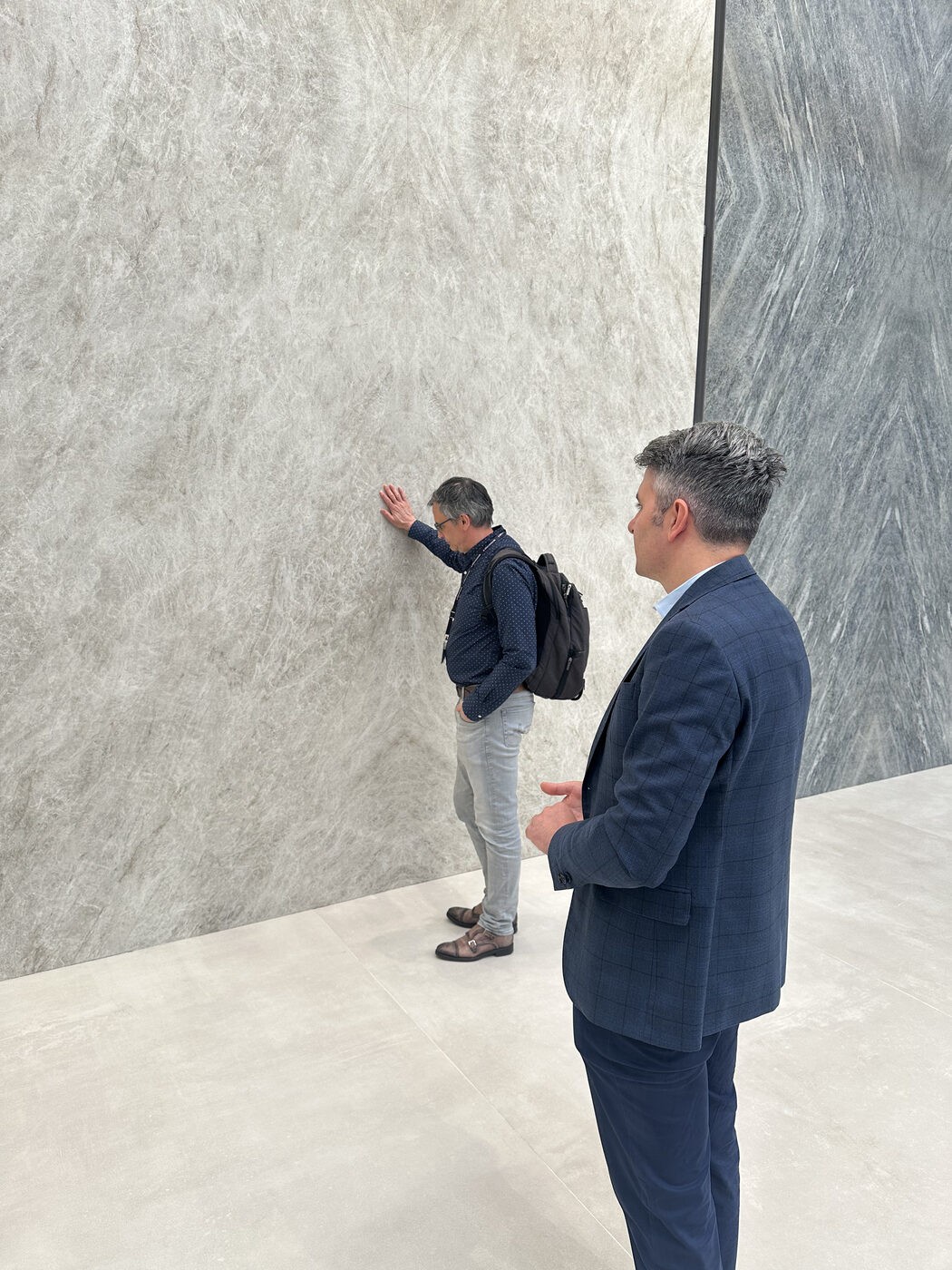
What's happening in Italian porcelain tile factories right now is remarkable. Using football field-sized ovens and hyper-realistic digital photography, manufacturers are creating tiles so convincing you have to touch them to believe they're not real stone. The innovations in texture, finish, and versatility are changing what designers can do with this once-humble material.
Reach Out and Touch It: What’s New with Porcelain.
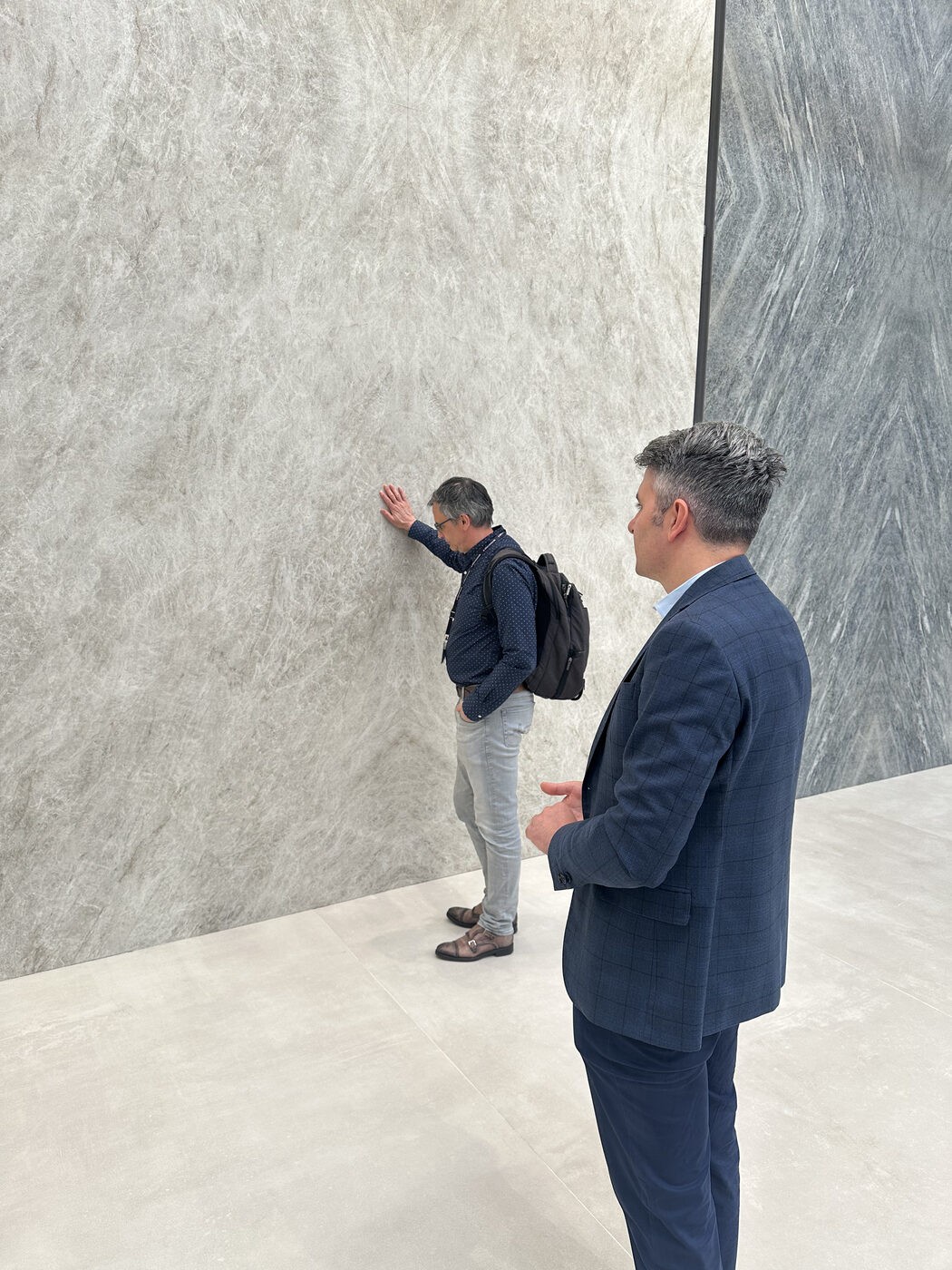
If you’ve ever had the chance to walk the floors at Cersaie, KBIS, or Coverings over the past few years, you would have noticed something remarkable happening in the world of Italian porcelain tile – it is undergoing a tactile revolution. This shift matters because texture has moved from a secondary detail to the primary protagonist of surface design. We are no longer looking at materials that merely mimic the world; we are looking at a new generation of surfaces that invite a physical connection to our environment.
This evolution is significant because it brings a new dimension to previously flat spaces. By using hyper-realistic 3D technology, manufacturers can now evoke the same emotional and sensory responses once reserved exclusively for rare, natural materials. For the designer, this means the "feel" of a room—the way it catches light and responds to a human touch—is no longer limited by the cost of stone and wood.
This new era belongs to surfaces so unique and diverse that you can’t help but reach out and touch them.
Here are the three major innovations that are reshaping the industry:
1. Hyper-Realism
Texture as Sculptural Art
The visual quality of modern porcelain tile is astonishing. Walk into a lobby with porcelain tile on the walls, and you’d perceive it as marble. Run your hand along what appears to be a weathered wood floor, and you’ll be shocked to learn no trees were used in its creation.
Italian manufacturers such as Florim and Atlas Concord utilize highly advanced, roboticized factories to create their tiles. In a process that begins with the same clay and limestone used by Romans millennia ago, the paste is rolled out on massive conveyor belts and precisely trimmed into perfect rectangles before being baked. The key innovation is the printing stage: extremely high-resolution images of natural materials like real stone or wood are captured and then printed onto the tile surface during the baking process.
But here’s the clever part: to avoid that repetitive, obviously manufactured look, these factories produce 18 different pattern variations for each tile design, so that when the tiles are laid, the floor or wall appears as naturally as real stone.
The range of materials now replicable is remarkable. Marble veining, onyx translucency, limestone fossils, wood grain with knots and weathering, terracotta imperfections, even concrete texture—all captured with such fidelity that you find yourself reaching out to touch it just to confirm what you're seeing.
2. Tactile Innovation
The “Touch First” Philosophy
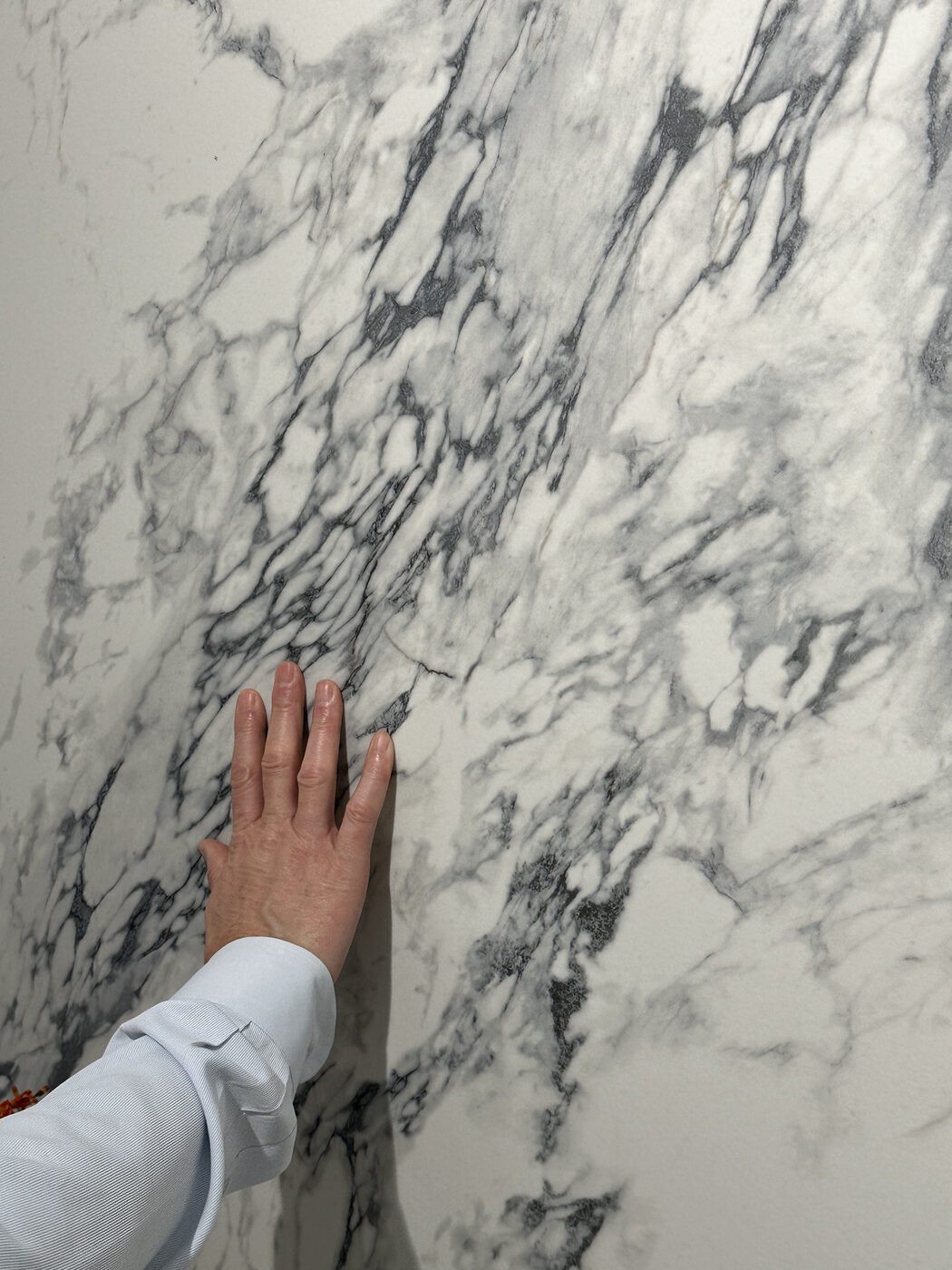
Visual realism is only half the story. What really makes you want to reach out and touch these tiles is the extraordinary range of finishes available today – and the fact that manufacturers can now create genuine 3D textural effects.
To understand this advancement, you need to understand its history. In Roman times, if you wanted polished marble, there were people who spent hours hand-sanding it until it gleamed. By the mid 19th and 20th centuries, electric sanding machines made the process faster, but you were limited to two options: polished or rough.
Today, there are hundreds of different finish options, and this is where technology has truly evolved. Italian manufacturers have developed sophisticated polishing and finishing techniques that can give you a leather feel, a matte surface, a semi-gloss, a soft ridge texture, a sandy finish, or a mirror-like high polish. Each finish serves a purpose—by intentionally layering on glaze, the finishes add texture inspired by natural stone.
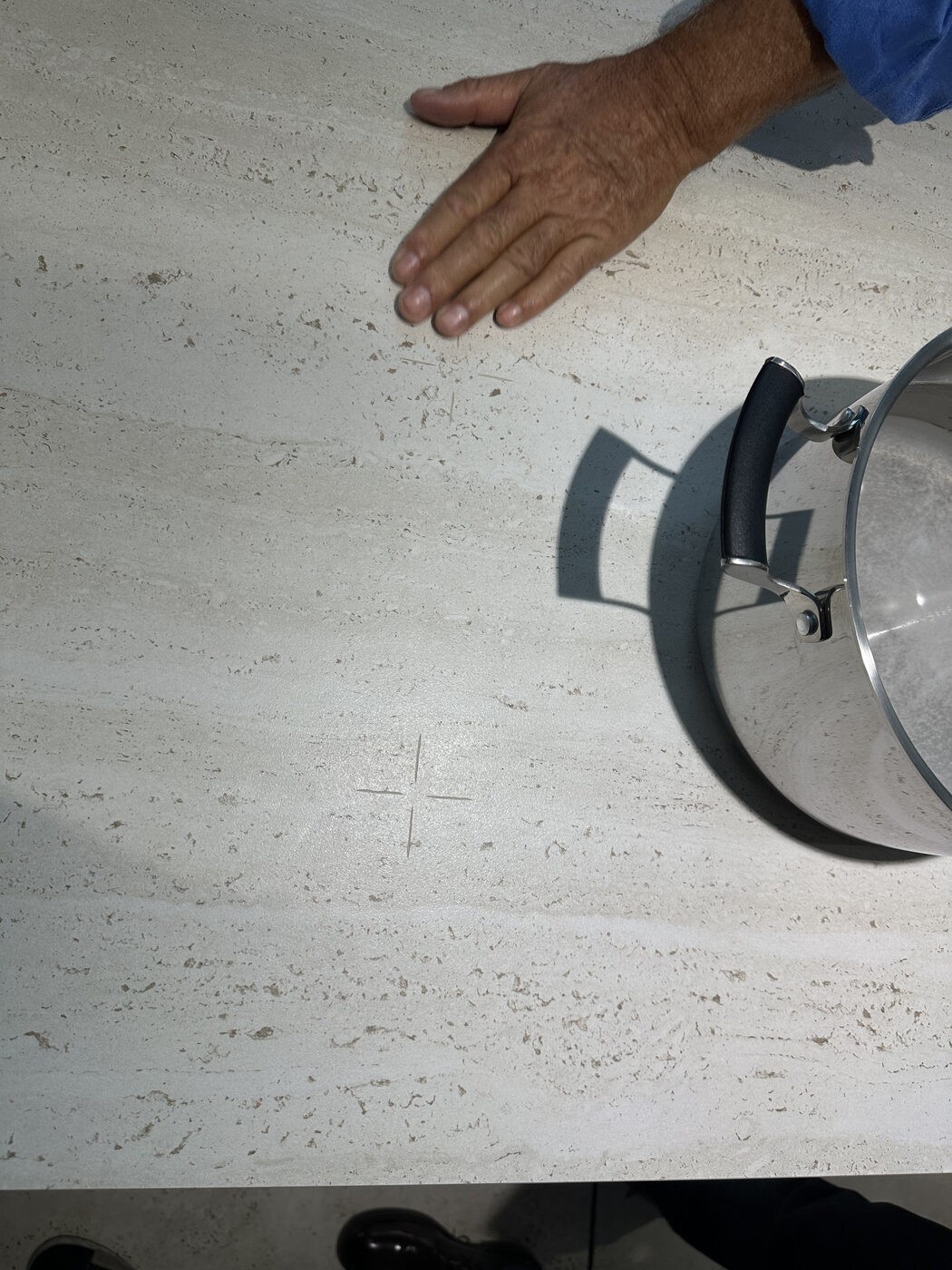
The result is surfaces that invite interaction. You're drawn to touch them because the visual realism is so convincing, and you're rewarded with a tactile experience that confirms the illusion.
Stovetop
3. Multi-Use Performance
A diverse range of applications
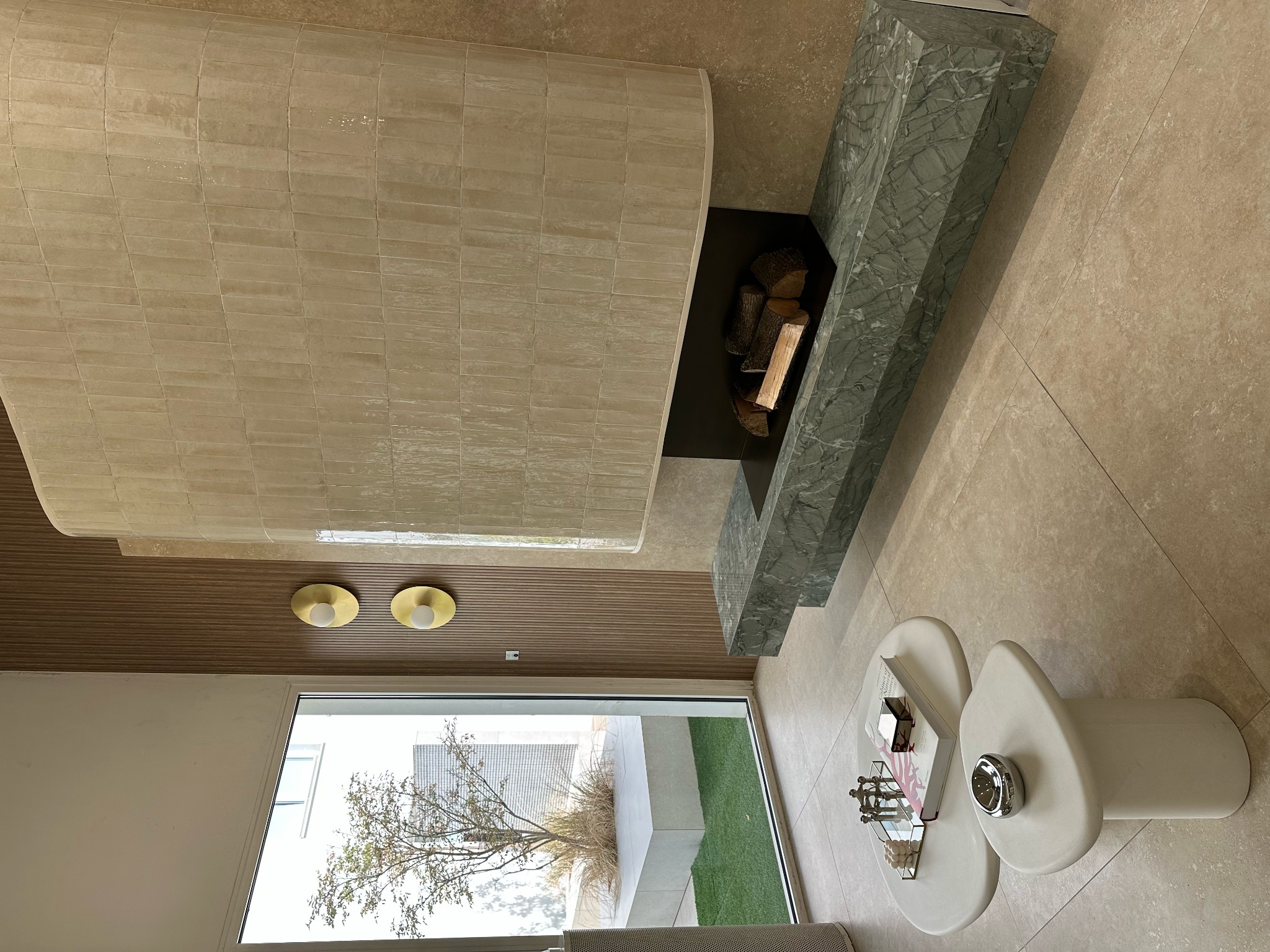
Perhaps the most practical innovation is the sheer versatility of modern porcelain tile. Natural stone is beautiful, but it's heavy, it stains, it chips, and it can only be cut so thin. Marble countertops famously stain from wine and coffee. Large stone slabs for lobbies or feature walls are extraordinarily expensive and require significant structural support. And if you want stone in a humid environment, such as a spa or a boat interior, real wood or stone can deteriorate quickly.
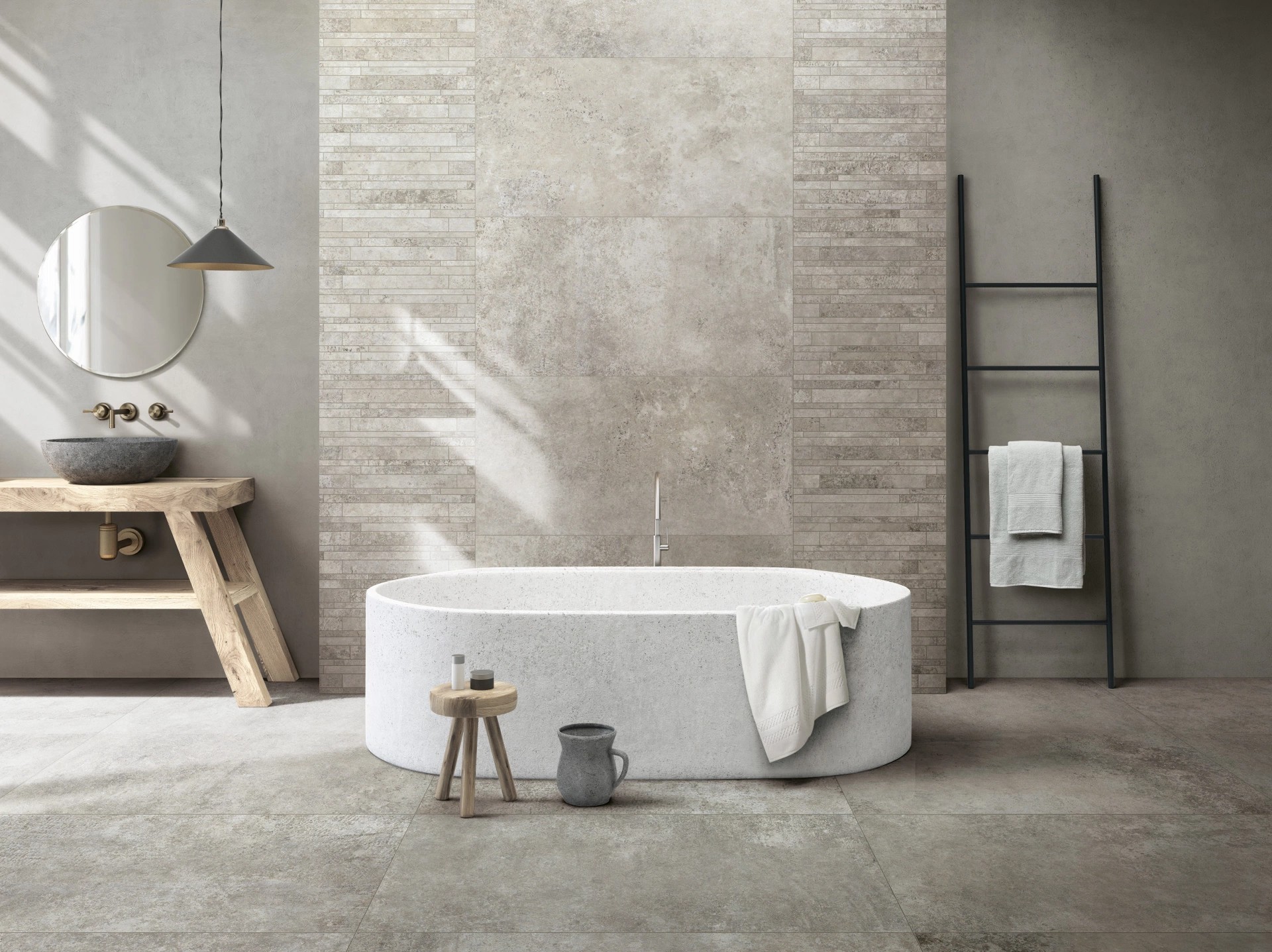
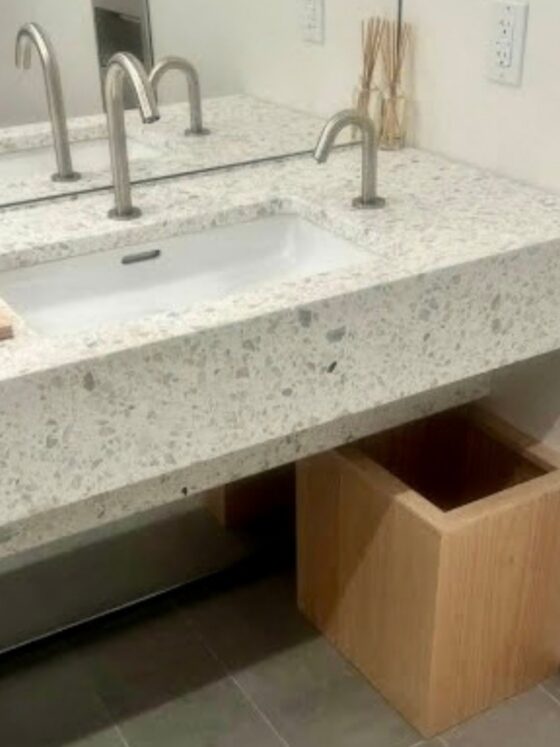
Bathroom Design with a wood and marble facade, Florim
Porcelain tile solves all of these problems while maintaining—and in some cases exceeding—the aesthetic of natural materials.
The thickness versatility alone is remarkable. Manufacturers can produce tiles as thin as 6 millimeters, almost like wallpaper, perfect for covering large surfaces without adding significant weight. But they can also produce extra-thick tiles for outdoor applications, building exteriors, or even paving stones around swimming pools. This range means you can use the same material family for your building's facade, lobby walls, floors, kitchen counters, and furniture surfaces.
The Surface Outlook for 2026
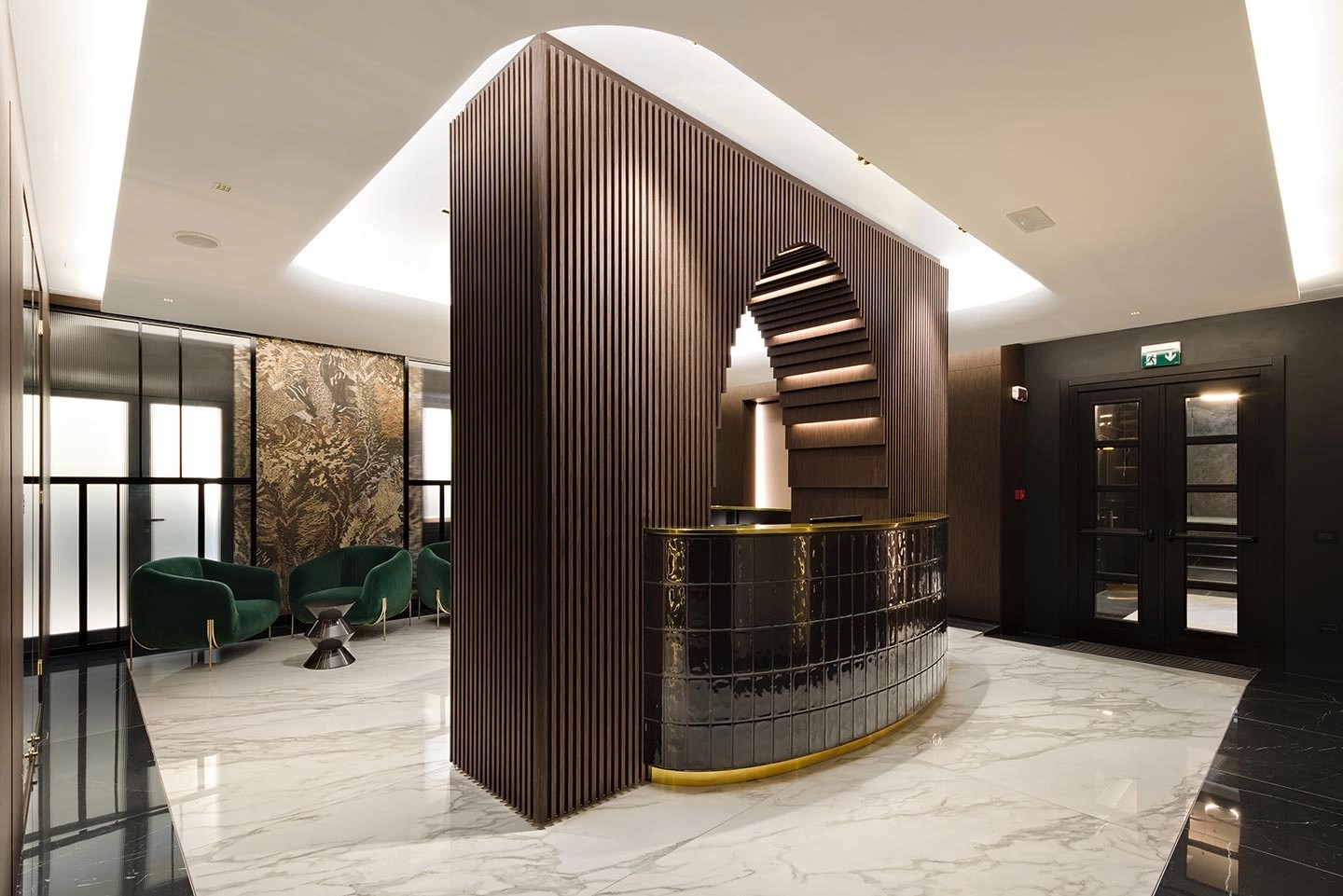

Florim Ceramics (both)
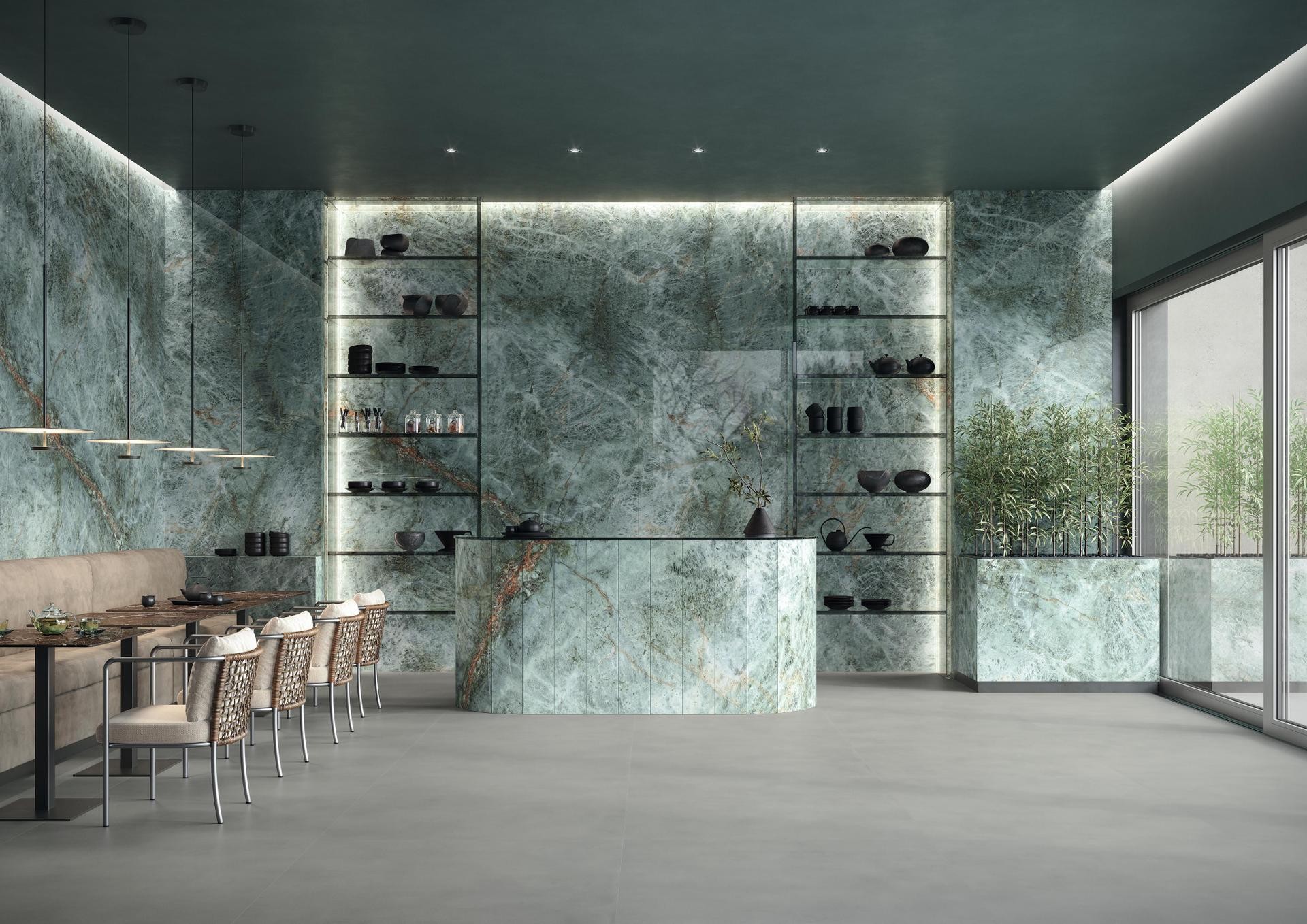
Atlas Concorde, Marvel Diva
1. Aesthetic Evolution: Surfaces are becoming works of art in their own right, valued for their visual and tactile contribution to a space as much as their function
2. Technological Achievement: Digital printing and extrusion are making “impossible” textures a commercial reality, democratizing what was once the province of custom artisanal production
3. Design Versatility: Achieving a custom, high-end look is now possible without the extreme costs of artisanal labor, opening new possibilities for mid-market residential and hospitality projects alike.
What's clear is that Italian porcelain tile has entered a new era. The combination of visual realism, tactile sophistication, and multi-use versatility means that whether you're designing a residential kitchen, a hotel lobby, a restaurant floor, or a building exterior, porcelain tile is no longer just the practical choice—it's often the most interesting one, too.